


PEPR TREASURE · Work Package 2
Augmented organ perfusion
Graft pathway and organ perfusion
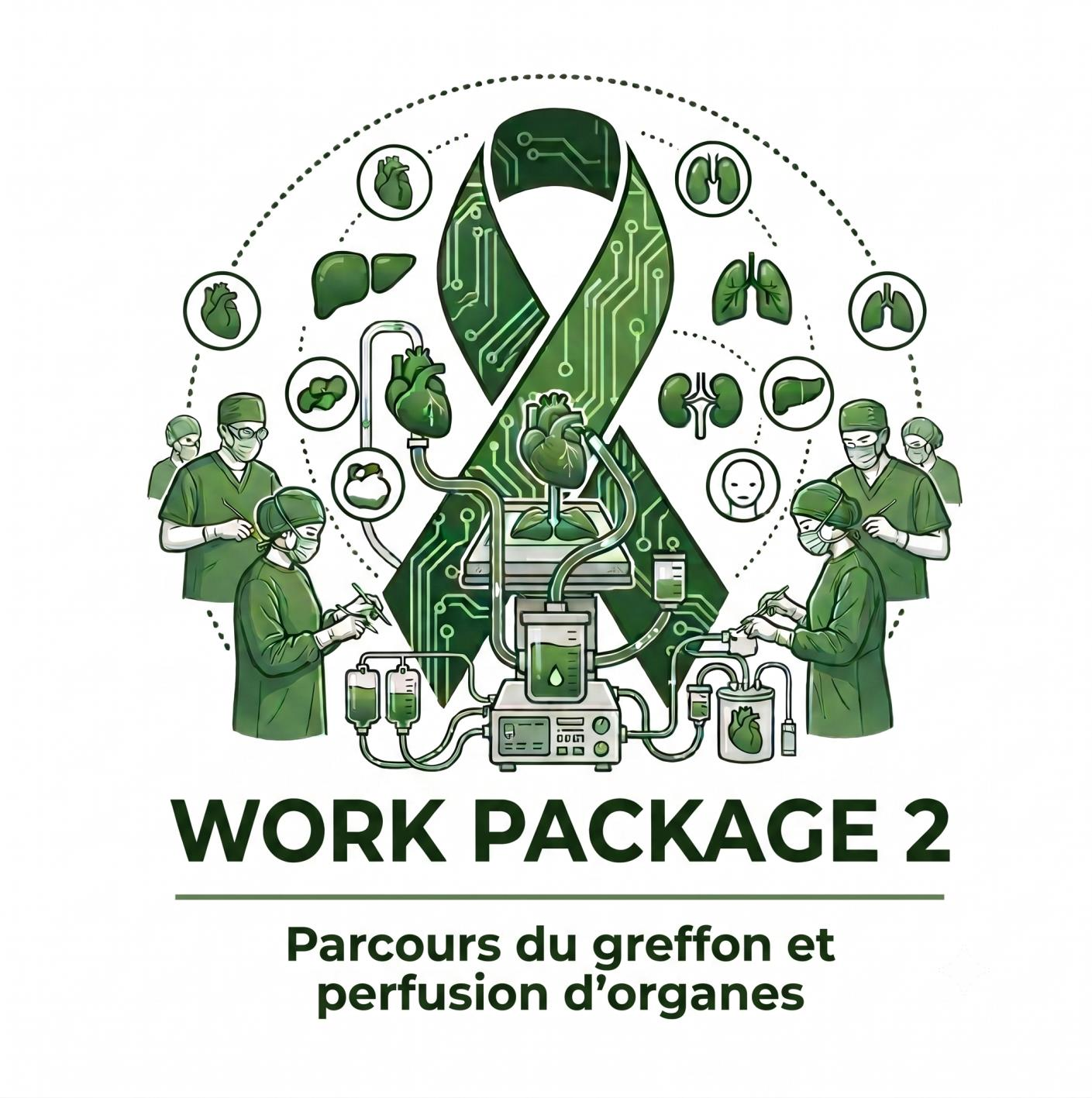
WP2 improves perfusion technologies to preserve, test and regenerate organs between retrieval and transplantation. The goal: to increase organ quality and longevity, expand the donor pool and contribute to the overall target of +15% transplants.
- Liver
- Heart
- Lung
- Kidney
Axes and objectives
- 1
Digital platform for multi-organ procurement
Today, procurement information often passes by phone or by hand, leading to data loss. WP2 is developing a digital platform to centralise, coordinate and automate all data (anaesthesia, timings, assessment): real-time organ tracking, remote adjustment of perfusion parameters, integration of new sensors, and direct feeding of the WP1 database.
- 2
Shared perfusion hubs
The use of perfusion machines (hypothermic or normothermic) is not yet uniform in France and requires specialised expertise. The project is evaluating regional “hubs” (modelled on PRISME in Île-de-France), pooling machines and qualified staff across several hospitals — to optimise logistics, better repair organs before transplantation, and serve as sites of innovation and training.
- 3
The “In Machina” project — Long-duration normothermic perfusion
Keep organs in near-physiological conditions for several days, up to two weeks — opening the way to genuine therapies on the isolated organ. Three sub-objectives:
Drug treatments on isolated organs
On explanted livers or surgical specimens (Liver4Life prototype), test direct therapeutic strategies, in particular against hepatocellular carcinoma and colorectal metastases.
New imaging tools and biomarkers
Deploy breakthrough technologies to assess organs in the machine: real-time mass spectrometry, hyperspectral imaging, confocal endomicroscopy, ultrafast ultrasound.
Repairing marginal grafts
Through mathematical modelling and biochemical analysis, stratify an organ’s viability to “repair” and safely use grafts initially deemed too fragile.
Expected impact
By better understanding the physiopathology of organs outside the body and optimising their transport (including from France’s overseas territories), WP2 considerably expands transplantation possibilities. Viability data from perfused organs will feed the algorithms of the future AI clinic (WP6) and pave the way for bio-artificial organs (WP3) or organs from genetically modified animals.